Khan’s £400k renters’ army: London landlords face £40,000 fines
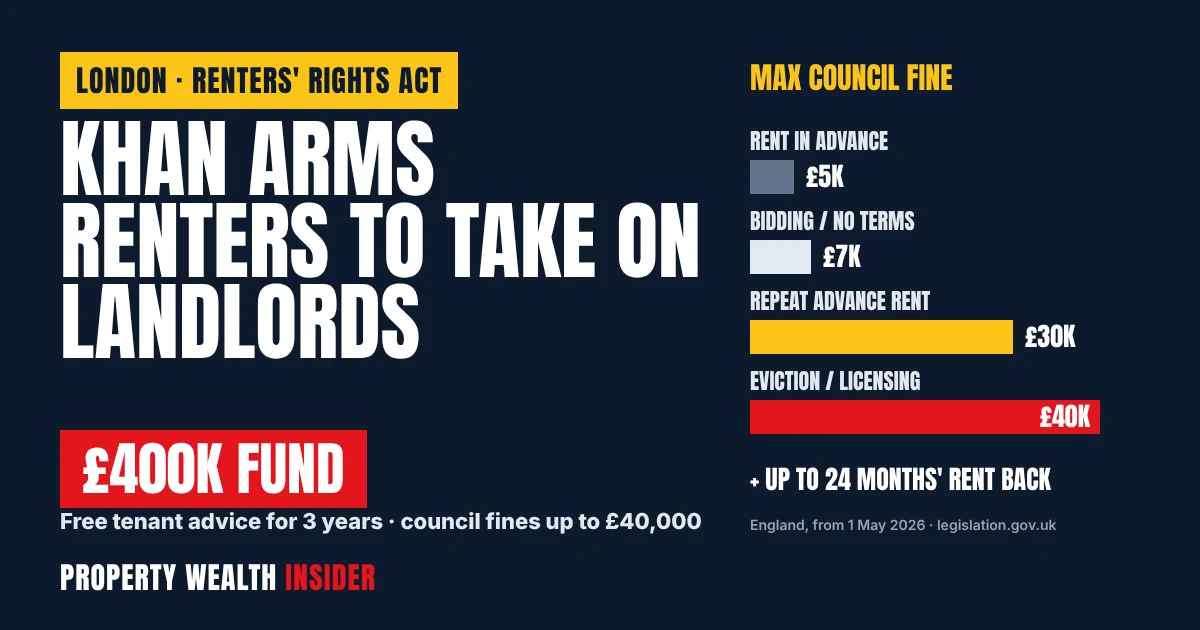
Sadiq Khan is putting £400,000 behind a push to turn London’s 2.7 million private renters into Renters’ Rights Act enforcers. City Hall’s Renters’ Rights Enforcement Fund will pay up to two organisations, over three years, to give tenants free advice on their rights, help them challenge rogue landlords and seek redress. The rest of the pot trains council enforcement officers to use their new powers.
Bids for the money closed on 2 October 2026, so the advice services are now being chosen. For landlords, the message is simple: more London tenants will know they can report a breach, and more borough officers will know how to fine you for it.
The fines are not small. Since 1 May 2026, councils across England can issue civil penalties of up to £7,000 for first breaches of the new tenancy rules and up to £40,000 for serious offences. Tenants can now claim back up to two years’ rent through a rent repayment order. Below we set out every verified penalty, what London tenants can now challenge, and a checker to work out your own worst-case exposure.
Key facts
- The Mayor’s Renters’ Rights Enforcement Fund is worth £400,000. Most of it funds up to two advice organisations for three years. The rest trains borough enforcement officers.
- The Act’s main tenancy reforms came into force in England on 1 May 2026. Section 21 is gone and most private tenancies are now periodic.
- Councils can fine landlords up to £7,000 for breaches such as no written statement of terms, rental bidding or discrimination. The cap is £40,000 for serious offences, including unlawful eviction.
- Rent repayment orders now reach up to 2 years’ rent (it was 12 months), and tenants have 2 years to apply.
- The PRS Database is due to start a regional rollout from late 2026. Compulsory ombudsman membership is expected in 2028. Neither is live yet.
What the Mayor is funding
Khan first announced the £400,000 fund on 26 March 2026, ahead of the Act’s 1 May start date. He said it would support advice and renters’ groups, including renters’ unions, and pay for training for borough enforcement officers.
On 6 August 2026 City Hall set out the detail. Most of the money goes to up to two organisations that will give free advice and support to renters across London for three years. They will help tenants understand their rights, challenge rogue landlords and get help with dangerous conditions, unfair rent increases and landlords who ignore the law. The remainder trains council officers to use the new enforcement powers.
Expressions of interest closed on 7 September. A second phase ran from 13 September to 2 October. City Hall has not yet named the winning organisations or published the exact split between advice and training.
Why £400,000 matters more than it sounds: it does not pay for enforcement directly. It pays for advisers who help tenants spot breaches, gather evidence and file claims, and for officers trained to act on them. Separately, the government gave councils in England £18.2 million of funding in 2025/26 for the Act’s new duties, allocated by the number of private rented homes in each area.
The penalties councils can now issue
These figures come from the Renters’ Rights Act 2025 and the amended Housing Act 1988, Housing Act 2004, Protection from Eviction Act 1977 and Tenant Fees Act 2019. All of the penalties below have applied in England since 1 May 2026.
| Breach | Maximum civil penalty | Legal basis |
|---|---|---|
| No written statement of terms; using a fixed term, notice to quit or oral notice to end a tenancy; serving a fake possession notice; relying on a ground without reasonable belief | £7,000 | Housing Act 1988 s16I |
| Knowingly or recklessly misusing a possession ground; re-letting or marketing in the restricted period after a sale or move-in ground; continuing a breach after a penalty; repeat breach within 5 years | £40,000 (or prosecution) | Housing Act 1988 s16J/s16K |
| No stated asking rent in a written advert, or inviting or accepting bids above it (rental bidding) | £7,000, plus up to £7,000 more for a repeat within 5 years | Renters’ Rights Act s57 |
| Discriminating against tenants with children or on benefits | £7,000, plus up to £7,000 more for a repeat within 5 years | Renters’ Rights Act s40 |
| Taking rent before the tenancy is signed, or more than the rules allow | £5,000 (£30,000 if it amounts to a repeat offence) | Tenant Fees Act 2019 s8 |
| Unlawful eviction or harassment | £40,000 | Protection from Eviction Act 1977 s1A |
| Housing offences, e.g. unlicensed HMO or selective-licence property, ignoring an improvement notice | £40,000 (was £30,000) | Housing Act 2004 s249A |
These are maximums. Councils set the actual amount, and the government’s guidance says the top tier is for serious, persistent or repeat cases. Penalties can also stack: a breach that continues more than 28 days after a fine can lead to a further penalty.
Rent repayment orders: two years’ rent at stake
This is where the free advice services bite. A rent repayment order (RRO) is made by the First-tier Tribunal, usually on a tenant’s application. Since 1 May 2026 the maximum is rent for a period of up to 2 years, double the old 12 months. Tenants also now have 2 years from the offence to apply.
RROs apply to listed offences. These include unlawful eviction or harassment, violence to secure entry, knowingly misusing a possession ground, re-letting or marketing in breach of the restriction, continuing tenancy-reform breaches, letting an unlicensed HMO or selective-licence property, and failing to comply with an improvement notice or prohibition order. Superior landlords (for example in rent-to-rent setups) and company directors can now be pursued too.
Worked example: a two-bed lets at £2,200 a month in a London borough that runs selective licensing, and the landlord never applied for a licence. The council can fine up to £40,000. The tenant can separately seek an RRO of up to 24 × £2,200 = £52,800. That puts the worst case at £92,800 before legal costs. The tribunal must weigh conduct and the landlord’s finances, but it must also take account of any previous convictions, penalties or RROs.
What London tenants can now challenge
City Hall-funded advisers will be pointing tenants at these rights, all in force in England since 1 May 2026:
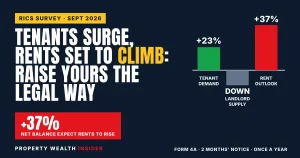
- Rent increases. Rent can rise once a year, using a section 13 notice with at least two months’ notice. Rent review clauses no longer work. Tenants can apply to the First-tier Tribunal. The tribunal cannot set the rent above your proposed figure, and in cases of undue hardship it can delay the increase by up to two months.
- Rental bidding. Written adverts must state a rent, and you cannot invite or accept offers above it.
- Rent in advance. You can ask for no more than one month’s rent after signing and before the tenancy starts.
- Discrimination. No blanket bans on families with children or tenants on benefits.
- Evictions. Section 21 has been abolished. Possession now needs a valid section 8 ground, and misusing one is a £40,000 offence.
- Pets. You must consider a request within 28 days and cannot unreasonably refuse.
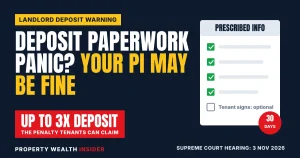
- Deposits. A deposit not protected properly can lead to a court award of 1 to 3 times the deposit, and that claim survives the end of the tenancy.
Check your penalty exposure
Tick everything you are definitely compliant with. Anything left unticked counts as a potential breach. The checker adds up the statutory maximums, so it shows your worst case, not what a council would typically charge.
Renters’ Rights penalty exposure checker
Guide only, not legal advice. It uses statutory maximums for England in force from 1 May 2026. Councils and tribunals decide actual amounts, which are often lower. Prosecution with an unlimited fine is an alternative for serious cases. It does not cover gas, electrical or other safety offences.
With the defaults (£2,200 rent, no written statement, no licence, first breach), the checker shows £47,000 of maximum civil penalties plus a £52,800 rent repayment order, which is £99,800 in total. Switching to “repeat” raises the written-statement fine to £40,000 and makes it RRO-eligible as a continuing breach.
What is in force and what is still coming
| Measure (England) | Status |
|---|---|
| Council investigatory powers (information requests, entry) | In force since 27 December 2025 |
| Periodic tenancies, end of section 21, new possession grounds, once-a-year rent increases | In force since 1 May 2026 |
| Rental bidding ban, rent in advance limit, anti-discrimination, pets | In force since 1 May 2026 |
| New civil penalties, £40,000 housing-offence cap, 2-year RROs | In force since 1 May 2026 |
| Information sheet to existing tenants / written summary for verbal tenancies | Deadline was 31 May 2026 |
| PRS Database registration (with annual fee to be confirmed) | Coming: regional rollout from late 2026 |
| PRS Landlord Ombudsman mandatory membership | Coming: expected 2028 |
| Decent Homes Standard for private rentals | Proposed: 2035 or 2037, not confirmed |
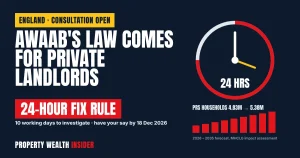
| Awaab’s Law for private rentals | Proposed: timing out to consultation |
Once the database is live, failing to register will carry a fine of up to £7,000, and up to £40,000 for an offence such as giving false information. Unregistered landlords will be unable to use most possession grounds. Those penalties are in the Act but not yet switched on.
What to do now
- Audit every tenancy. Confirm each new tenancy since 1 May 2026 has a compliant written statement, and that every pre-May tenant got the government information sheet.
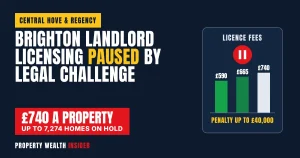
- Check your borough’s licensing. Many London boroughs run additional or selective licensing. An unlicensed let is the fastest route to a £40,000 fine plus a 24-month RRO.
- Fix your marketing. Every written advert needs a fixed asking rent. Tell your agent in writing that bids above it must be refused.
- Use the section 13 process for any rent rise. Give at least two months’ notice and set a rent you can evidence against local comparables, because the tribunal is free to tenants.
- Only use a possession ground you can prove. If you use the sale or move-in ground, do not re-let or market the property during the restricted period.
- Keep a dated evidence file. Store notices served, deposit certificates, licence numbers and advert copies. Tenants funded by City Hall’s advice service will be asked for evidence, and so will you.
- Prepare for the database. Gather gas, electrical and EPC certificates for each property now. Registration needs them.
- Written statement of terms on file for every tenancy since 1 May 2026
- Information sheet sent to every pre-May tenant
- Borough licence (HMO, additional or selective) checked and held
- Adverts show a fixed rent; no bidding
- No more than one month’s rent taken before the tenancy starts
- Rent increases via section 13 notice, at least two months ahead, once a year
- Deposit protected and prescribed information served
- Pet requests answered within 28 days
- Gas, electrical and EPC certificates ready for database registration
FAQ
How much can a landlord be fined under the Renters’ Rights Act?
Up to £7,000 per breach for most first-time breaches, such as failing to give a written statement, rental bidding or discrimination. Serious offences, including knowingly misusing a possession ground and unlawful eviction, carry up to £40,000 or prosecution.
What is the Mayor of London’s Renters’ Rights Enforcement Fund?
It is a £400,000 City Hall fund. Most of it pays up to two organisations to give London renters free advice for three years, and the rest trains council enforcement officers. Bidding closed on 2 October 2026.
How much rent can a tenant claim back with a rent repayment order?
Up to two years’ rent, less any universal credit paid towards it, for offences such as unlawful eviction, licensing failures or misuse of possession grounds. Tenants have two years from the offence to apply to the First-tier Tribunal.
Can my tenant challenge a rent increase?
Yes. In England, a tenant can refer a section 13 rent increase to the First-tier Tribunal. The tribunal cannot set a rent higher than the one you proposed, and it can delay the increase by up to two months for hardship.
Do London landlords have to register on the PRS Database yet?
Not yet. The government’s roadmap has a regional rollout starting in late 2026, with the fee to be confirmed. Ombudsman membership is expected to become mandatory in 2028.
Do these rules apply in Wales or Scotland?
No. The tenancy reforms, penalties and rent repayment orders covered here apply to England. The GLA fund covers London only.
Sources
- Mayor of London: Mayor helps London’s renters use their new rights and stand up to rogue landlords (6 August 2026)
- Mayor of London: new package of support ahead of the Renters’ Rights Act (26 March 2026)
- Mayor of London: Renters’ Rights in London
- Renters’ Rights Act 2025, legislation.gov.uk
- Renters’ Rights Act 2025 (Commencement No. 2 and Transitional and Saving Provisions) Regulations 2026
- Housing and Planning Act 2016 s44 (rent repayment order amount)
- Housing and Planning Act 2016 s40 (RRO offences)
- Housing Act 2004 s249A (financial penalties for housing offences)
- Housing Act 2004 s214 (tenancy deposit proceedings)
- Tenant Fees Act 2019 s8 (financial penalties)
- GOV.UK: Guide to the Renters’ Rights Act
- GOV.UK: Implementing the Renters’ Rights Act 2025 roadmap
- MHCLG: Renters’ Rights Act landlord checklist
This article is news and general guidance, not financial, legal or tax advice.