£7,500 lodger tax break frozen since 2016: Budget plea for £11k
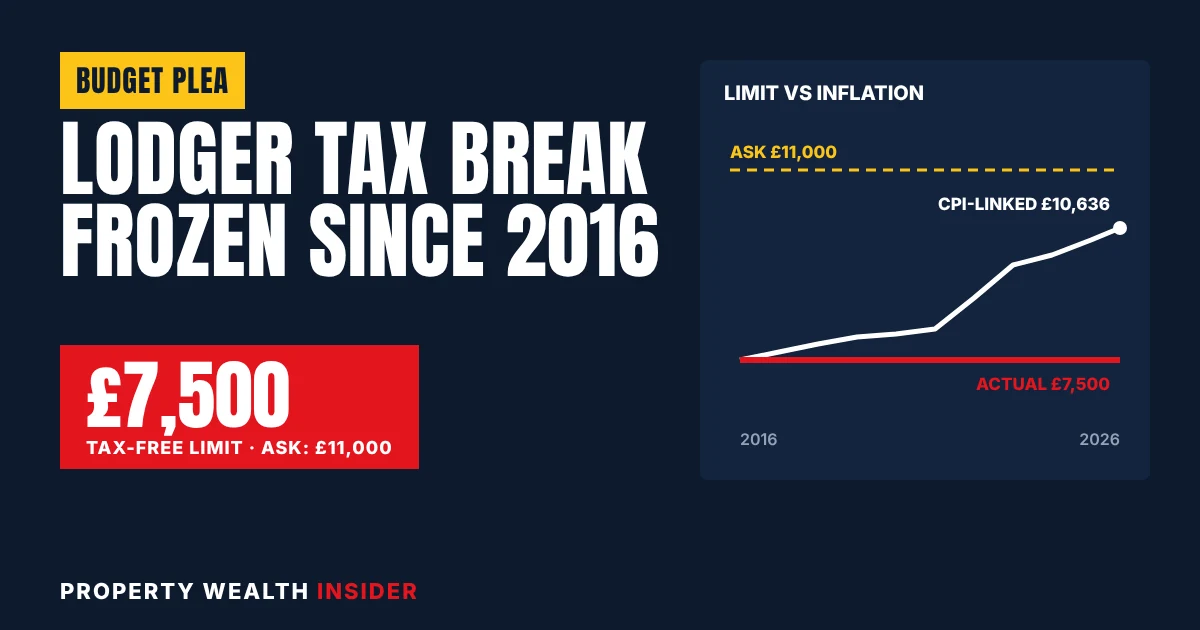
The tax-free allowance for homeowners who take in a lodger has been stuck at £7,500 a year since April 2016, and the flatshare site SpareRoom wants the Chancellor to lift it to £11,000 in the Budget on Wednesday 28 October 2026.
Ten years of rising prices have quietly shrunk the relief. On official ONS inflation figures, £7,500 today buys about what £5,215 did when the limit was set. Meanwhile the average UK room now lets for £769 a month, or £9,228 a year, according to SpareRoom, well over the tax-free line.
This matters to anyone letting a furnished room in their own home across the UK, and to resident landlords running a B&B or guest house from their main residence. Below: how the scheme works now, the two ways to pay tax once you go over the limit, worked examples in pounds, and a calculator that shows what you would save if the threshold went up.
Key facts
- Rent a Room lets you earn up to £7,500 a year tax-free from furnished accommodation in your only or main home, or £3,750 if someone else also receives letting income from the same property.
- The limit went up from £4,250 to £7,500 on 6 April 2016, its first rise since 1997. It has not moved since.
- SpareRoom is asking for £11,000 a year, plus a 31-day minimum stay to stop holiday lets using the relief.
- Linked to CPI inflation, the 2016 limit would now be about £10,786 (our calculation from ONS data to September 2026).
- Go over the limit and you choose: pay tax on receipts minus £7,500 (no expenses), or on your actual profit.
- The Budget is on 28 October 2026. Nothing changes unless the Chancellor announces it.
What SpareRoom wants from the Budget
SpareRoom’s campaign has two asks. First, raise the tax-free threshold from £7,500 to £11,000 a year, about £917 a month. Second, add a 31-day minimum stay so the relief goes to people renting rooms to live in, not to short-term holiday guests.
Its argument is about supply. SpareRoom estimates there are around 28 million empty bedrooms in England, Wales and Scotland, built from 2021 Census data and the Scottish House Condition Survey. It says letting just 5% of them could house about 1.4 million people, with no building needed.
Its own listings data points the wrong way. Lodger room adverts were down 2.5% year on year in January 2026, the first fall since the pandemic. Across all room ads, supply was down 4.7% year on year in Q3 2026, while average room rents hit a record £769 a month in the UK and £1,002 in inner London.
In force now vs proposed: the £7,500 limit is the law today. £11,000 and the 31-day rule are a campaign ask only. The Treasury has not said it will change the scheme.
How Rent a Room works now
The scheme is a UK-wide income tax relief run by HMRC. It covers furnished accommodation in your only or main home. You do not have to own the property, and you can let as much of your home as you like. It cannot be used for a home converted into separate flats.
The limit is tested against gross receipts, not profit. HMRC’s HS223 helpsheet says that includes rent plus anything you charge for meals, goods and services such as cleaning or laundry. The limit stays the same even if you let for less than 12 months.
- Receipts of £7,500 or less: the exemption is automatic. You do not need to tell HMRC or file a return for it.
- Receipts over £7,500: you must complete a Self Assessment tax return, and you pick one of two methods.
- Method A (normal): tax on your actual profit, meaning receipts minus allowable expenses and capital allowances.
- Method B (Rent a Room): tax on receipts minus £7,500 (or £3,750). No expenses or capital allowances can be deducted.
Method A applies by default. To use Method B you must elect for it, and HMRC treats a return completed on the Method B basis as an election. The election runs until you withdraw it or your receipts drop below the limit. Under HS223, you must make or withdraw an election within one year of 31 January after the end of the tax year. For 2025-26, that means by 31 January 2028.
You cannot create a loss under the scheme. If your costs exceed your rent and you want to record the loss, you must tell HMRC you want Method A.
Scheme or normal method? Worked examples
These use the 2026-27 rates for England, Wales and Northern Ireland: 20% basic, 40% higher, 45% additional. Scotland has its own bands, so Scottish taxpayers should use their own marginal rate.
Example 1: basic-rate homeowner. Priya lets a room for £700 a month, so £8,400 a year, and has £1,000 of allowable costs. Method A: £7,400 profit × 20% = £1,480. Method B: (£8,400 − £7,500) × 20% = £180. Electing for the scheme saves her £1,300. At an £11,000 limit she would pay nothing.
Example 2: higher-rate, with services. Tom charges £850 a month plus £50 a month for cleaning and laundry, so £10,800 in total. His costs are £1,500. Method A: £9,300 × 40% = £3,720. Method B: £3,300 × 40% = £1,320. An £11,000 limit would cut that to zero, saving him another £1,320 a year.
Example 3: a couple sharing the income. Sam and Alex jointly receive £800 a month (£9,600), split equally at £4,800 each. Because someone else receives letting income from the same home, each gets a £3,750 limit. Each pays tax on £1,050, which is £210 each at basic rate.
Example 4: when the normal method wins. Receipts of £9,000 with £8,200 of genuine costs give a Method A profit of £800, compared with £1,500 taxable under Method B. As a rule of thumb, Method A only comes out ahead when your costs exceed the limit, or when you have a loss to record.
| Monthly rent | Annual receipts | Tax now (20% / 40%) | Tax at £11,000 limit (20% / 40%) |
|---|---|---|---|
| £625 | £7,500 | £0 / £0 | £0 / £0 |
| £700 | £8,400 | £180 / £360 | £0 / £0 |
| £769 (UK average room, Q3 2026) | £9,228 | £346 / £691 | £0 / £0 |
| £850 | £10,200 | £540 / £1,080 | £0 / £0 |
| £917 | £11,004 | £701 / £1,402 | £1 / £2 |
| £1,002 (inner London average, Q3 2026) | £12,024 | £905 / £1,810 | £205 / £410 |
Figures use Method B with a single, unshared limit and no service charges. Average rents are from SpareRoom’s Q3 2026 rental index.
Rent a Room relief calculator
Enter your lodger’s rent, any extra charges and your costs. The calculator compares both methods, shows which is better, and works out what you would save if the threshold were raised to a figure you choose.
Rent a Room relief calculator
Guide only, not tax advice. Uses a single marginal rate (2026-27 rates outside Scotland) and assumes all lodger income falls in your chosen band. Does not model losses, capital allowances or the personal allowance taper. The proposed figure is a campaign ask, not law. We assume a raised limit would still be halved when the income is shared.
Ten years frozen: what inflation has done
The relief began in 1992. It reached £4,250 in 1997 and then stayed there until the government raised it to £7,500 from 6 April 2016, a rise announced in the July 2015 Summer Budget. That makes two increases in nearly 30 years.
We indexed the April 2016 limit using the ONS Consumer Prices Index (series D7BT). CPI was 100.2 in April 2016 and 144.1 in September 2026, a rise of about 44%. To keep its 2016 value, the limit would now need to be about £10,786. Put the other way, the real value of £7,500 has fallen by roughly 30%.
For context, HMRC’s own evaluation of the relief, published in December 2024, found that 6% of UK adults were renting out a furnished room in their home in 2023. Mean rental income was £3,580, and 90% of those landlords earned below £7,500. Most lodger hosts would see no change. The people who would gain are those letting rooms at today’s full market rents, especially in high-rent cities.
Lodgers and the Renters’ Rights Act
The Renters’ Rights Act changed how private properties in England are let from 1 May 2026. The government’s overview of the Act says different rules apply to lodgers.
Under gov.uk’s guidance for resident landlords, a lodger who shares your kitchen, bathroom or living room with you or your family is likely to be an excluded occupier. You only need to give reasonable notice, usually one rental period, and you do not need a court order to end the arrangement. A lodger who lives in your home but shares no living space is likely to have basic protection, so you would need a court order if they refuse to leave.
For homeowners put off by the new regime for whole-property lets, that flexibility is a real draw, and SpareRoom’s tax ask builds on it.
What to do now
- Add up gross receipts. Include rent and any charges for meals, cleaning, laundry or other services, for the tax year 6 April to 5 April.
- Check your limit. It is £7,500, or £3,750 each if anyone else receives letting income from the same home.
- Under the limit? You do not need to do anything for the scheme.
- Over the limit? Run both methods in the calculator above and elect for whichever gives less tax on your Self Assessment return.
- Watch the 2025-26 deadlines. Paper returns must reach HMRC by 31 October 2026, online returns by 31 January 2027, and tax is due by 31 January 2027. If this is your first year over the limit, HMRC’s registration deadline was 5 October 2026, so register now if you missed it.
- Watch the Budget on 28 October. If the limit changes, check the start date before assuming it applies to the current tax year.
- Room is in my only or main home and is furnished
- Gross receipts for the year totalled, including services
- Checked whether anyone else receives letting income from the home (£3,750 limit)
- Kept records of allowable expenses in case the normal method is better
- Compared Method A and Method B and chosen the cheaper one
- Election made or withdrawn within one year of the 31 January filing date
- Written lodger agreement in place, with notice terms agreed
- Checked mortgage lender, insurer and (if renting) landlord terms
FAQ
How much can I earn from a lodger tax-free in 2026?
Up to £7,500 a year in gross receipts under the Rent a Room scheme, or £3,750 if someone else also receives letting income from the same home. That is about £625 a month.
Is the Rent a Room limit going up in the Budget?
Not as far as anyone knows yet. SpareRoom has asked for £11,000, but the government has announced no change. The Budget is on 28 October 2026.
What happens if my lodger income goes over £7,500?
You must file a Self Assessment return. You can pay tax on receipts minus £7,500 with no expenses, or on your actual profit after expenses, whichever is lower.
Does money for meals and cleaning count towards the £7,500?
Yes. HMRC counts amounts received for meals, goods and services such as cleaning or laundry as part of your gross receipts.
Can I use Rent a Room if I rent my home rather than own it?
Yes. Gov.uk says you can use the scheme whether or not you own your home, as long as it is your main home. Check your tenancy agreement allows lodgers first.
Can I claim expenses under Rent a Room?
No. Under the scheme method you cannot deduct expenses or capital allowances. If your costs exceed the limit, the normal method will usually give a lower bill.
Sources
- GOV.UK: The Rent a Room Scheme
- HMRC: HS223 Rent a Room Scheme (2026)
- HMRC Property Income Manual PIM4001: Rent-a-room overview
- HMRC Property Income Manual PIM4030: alternative basis (Method B)
- HMRC: Rent a Room relief increase (July 2015)
- Explanatory Memorandum: Income Tax (Limit for Rent-a-Room Relief) Order 2015
- HM Treasury/HMRC: Rent a room relief, summary of responses (July 2018)
- HMRC: Evaluation of Rent a Room relief (December 2024)
- HM Treasury: Budget 2026 date letter
- GOV.UK: Income Tax rates and bands 2026-27
- GOV.UK: Self Assessment deadlines
- GOV.UK: Your lodger’s tenancy type
- GOV.UK: Renters’ Rights Act overview
- ONS: CPI index D7BT (2015=100)
- SpareRoom: Increase the Rent a Room threshold
- SpareRoom: Lodger rental supply decline
- SpareRoom: UK quarterly rental index Q3 2026
This article is news and general guidance, not financial, legal or tax advice. Take professional advice on your own circumstances.