Empty for 4 Weeks? A Void Wipes Out Your Rent Rise by £683
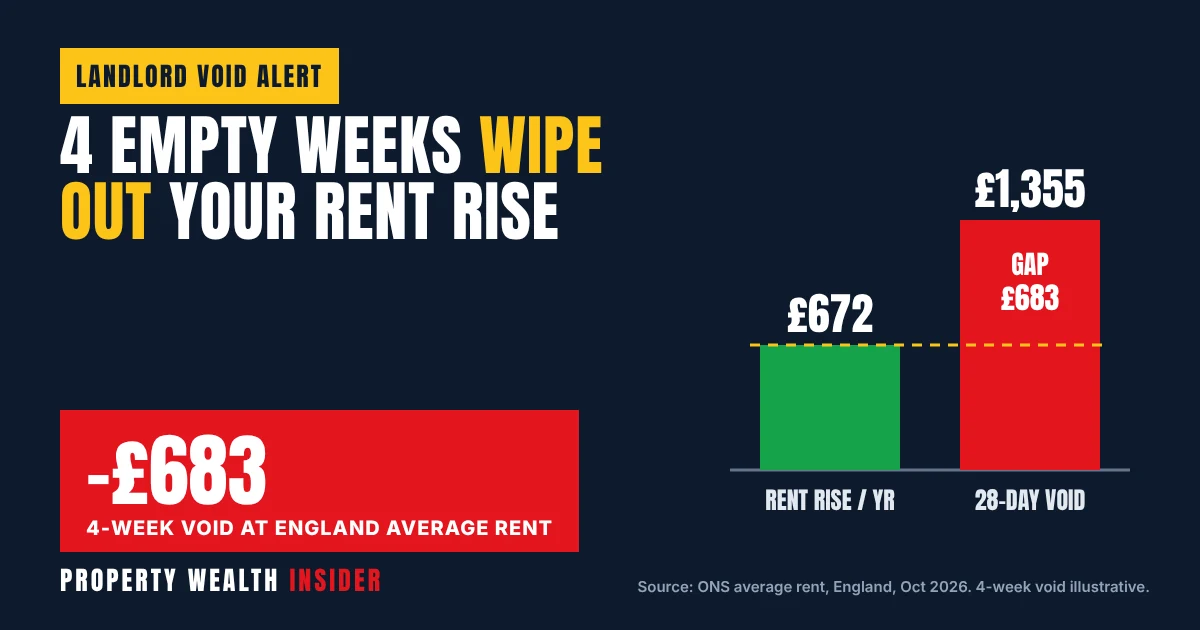
A landlord in England who pushes the rent up in line with the market, then sees the property sit empty for four weeks between tenants, ends the year worse off than if they had kept the tenant on the old rent.
Official figures out on 18 November 2026 put the average rent in England at £1,472 a month, up £56 on a year ago. That rise is worth £672 a year. But at £1,472 a month, an illustrative four-week (28-day) void costs about £1,355 in lost rent, roughly double the gain, leaving the landlord around £683 down.
This matters to every landlord weighing a re-let against a renewal, especially in England, where the Renters’ Rights Act has changed how and when rent can go up. Below we unpick the maths, show the worst-hit areas, and give you a calculator to run your own numbers.
Key facts
- Average private rent in England hit £1,472 a month in October 2026, up £56 (4.0%) on a year earlier (ONS).
- That rise adds £672 a year, but a four-week (28-day) void at £1,472 a month loses about £1,355 of rent: a £683 shortfall.
- On those averages, a void of just 14 days wipes out a whole year’s rent rise.
- In every English region a four-week void costs more than a year’s rise; in London the gap is about £1,143 (PWI calculation from ONS data).
- In England, rent can now go up only once a year via a Section 13 notice with at least 2 months’ notice.
The maths: how a void eats your rent rise
Start with the official rent figure. The Office for National Statistics’ Private rent and house prices bulletin, published on 18 November 2026, puts the average private rent in England at £1,472 a month in October 2026, up £56 or 4.0% on October 2025.
A £56 monthly rise is worth £672 over 12 months, but only if the property is let for all 12. Spread across a year, £1,472 a month works out at about £48.39 a day. Every empty day costs that.
Multiply £48.39 by 28 days, a four-week void, and you get £1,355. Take off the £672 gain and the landlord is £683 behind. Divide £672 by £48.39 and you find the tipping point: a void of about 14 days cancels a full year’s average rise.
| Void length | Lost rent at England average (£1,472) | Lost rent at London average (£2,350) | Lost rent at North East average (£793) |
|---|---|---|---|
| 1 week | £339 | £541 | £182 |
| 2 weeks | £678 | £1,082 | £365 |
| 3 weeks | £1,016 | £1,622 | £547 |
| 4 weeks | £1,355 | £2,163 | £730 |
| 6 weeks | £2,033 | £3,245 | £1,095 |
| 8 weeks | £2,710 | £4,327 | £1,460 |
Average monthly rents for October 2026 from the ONS. Lost rent = monthly rent x 12 / 365 x days empty. Excludes letting fees and other void costs.
Lost rent is only part of it. Most re-lets also bring a letting fee, a professional clean, fresh compliance paperwork and, while the place is empty, council tax and utility bills that the tenant would otherwise pay. Those can easily add several hundred pounds to the bill.
Region by region: void cost vs rent rise
We took the ONS average rent for each English region in October 2025 and October 2026, worked out the yearly value of the rise, and set it against the rent lost in a four-week void at today’s level. The result is the same everywhere: one empty month outweighs a year of rent growth.
| Region | Average rent Oct 2026 | Rise on Oct 2025 (per month) | Rise over 12 months | Cost of 4-week void | Gap | Break-even void |
|---|---|---|---|---|---|---|
| London | £2,350 | £85 | £1,020 | £2,163 | -£1,143 | 13 days |
| South West | £1,254 | £40 | £480 | £1,154 | -£674 | 12 days |
| South East | £1,448 | £55 | £660 | £1,333 | -£673 | 14 days |
| East of England | £1,302 | £47 | £564 | £1,199 | -£635 | 13 days |
| West Midlands | £983 | £35 | £420 | £905 | -£485 | 13 days |
| East Midlands | £928 | £31 | £372 | £854 | -£482 | 12 days |
| Yorkshire and The Humber | £872 | £39 | £468 | £803 | -£335 | 16 days |
| North East | £793 | £37 | £444 | £730 | -£286 | 17 days |
| North West | £979 | £52 | £624 | £901 | -£277 | 19 days |
| England | £1,472 | £56 | £672 | £1,355 | -£683 | 14 days |
PWI calculation from ONS data. Rents are ONS averages rounded to the nearest pound. Break-even void = days of lost rent that equal the 12-month value of the rise (rounded down; England is 13.9 days). Excludes letting fees and other void costs.
The North West, which the ONS says had England’s fastest rent growth at 5.6%, has the most headroom: about 19 empty days before the rise is wiped out. In the South West, with the slowest growth at 3.3%, it takes fewer than 12.
At the very top of the market the stakes are bigger still. The ONS puts the highest local average rent at £3,765 a month in Kensington and Chelsea. A four-week void there costs about £3,466, more than three times London’s average yearly rise of £1,020.
Calculator: void cost vs rent rise
Put in your own rent, the rise you think a new tenant would pay, how long you expect to be empty and what re-letting costs you. It shows the true cost of the void, whether the higher rent still leaves you ahead over a year, and how a smaller rise for your current tenant compares.
Void cost vs rent rise
Guide only, not financial advice. Looks at the first 12 months from the date the current tenant would leave, uses a 365-day year, and assumes the kept tenant’s rise applies for the full year (in England a Section 13 notice needs at least 2 months, so start the process early). Mortgage payments are shown as cash flow only because you pay them whether or not the property is let.
Worked £ examples
1. The average England landlord who re-lets
Rent was £1,416 a month. The tenant leaves and the property re-lets at £1,472 after 28 days. Lost rent is £1,355. Add a £500 tenant-find fee, £150 clean, £120 of certificates and £150 of council tax and utilities, and the void costs £2,275. The rise brings in £672 a year, so year one ends £1,603 down.
To break even in that first year, the new rent would have to be about £201 a month higher, not £56. Even with no re-letting costs at all, the rise would need to be about £118.
2. The same landlord who keeps the tenant
Instead, they serve a Section 13 notice for a £30 rise to £1,446. Over 12 months that brings in £17,352. Re-letting at £1,472 with a 28-day void and £920 of costs brings in about £15,389. The smaller rise wins by roughly £1,963.
3. A two-week void instead of four
Cut the gap to 14 days at £1,472 and lost rent drops to £678, almost exactly the £672 annual rise. You are still about break-even on rent alone, before fees. Every week you shave off the void is worth around £339 at the England average, and about £541 at the London average of £2,350.
What the Renters’ Rights Act changes
These rules apply to private landlords in England only, and came into force on 1 May 2026, according to the government’s overview for landlords. Wales, Scotland and Northern Ireland have their own regimes.
- Periodic tenancies. Tenancies now roll on (for example monthly) with no fixed end date, so you no longer get a natural “renewal” moment to reset the rent.
- Rent rises once a year. Use Form 4A under the Section 13 process, giving at least 2 months’ notice. You cannot increase the rent until at least a year after the last increase took effect, and tenants can challenge an above-market rent at the First-tier Tribunal (GOV.UK rent increases guide).
- Tenants give 2 months’ notice. Notice must be in writing and given on the rent day or the day before (GOV.UK tenant overview). That two-month window is your marketing window.
- No rent bidding. You must publish an asking rent and cannot accept offers above it, so a bidding war will not make up for a void.
- Rent in advance capped. Nothing can be taken before the tenancy agreement is signed, and then a maximum of 1 month’s rent in advance.
Put together, the Act makes the “push the rent on re-let” strategy weaker. A tenant who stays can still pay a market rise once a year, while a re-let cannot be bid up and carries the full void risk.
How to cut your void: step by step
- Check rents before you serve notice. Compare your rent with similar local listings and the ONS figure for your area. If you are already near market, a modest Section 13 rise to a good tenant usually beats a re-let.
- Talk to the tenant early. Ask about their plans a few months before their rent anniversary. A tenant who feels well treated is less likely to hand in notice.
- Market on day one of the notice. As soon as a tenant gives their 2 months’ notice, get photos, floorplan, EPC and the asking rent live. Arrange viewings with the outgoing tenant’s agreement and reasonable notice.
- Price it to let, not to sit. At England’s average rent, each empty week costs about £339. An asking rent £25 a month lower that lets two weeks sooner is ahead within the year.
- Line up compliance in advance. Book gas safety, EICR and EPC renewals during the notice period so paperwork never delays a move-in.
- Book the checkout, clean and trades back-to-back. Have the cleaner and any repairs ready for the day after the tenant leaves, and aim for the new tenancy to start within days.
- Reference quickly. Have your referencing and the paperwork for a new tenancy (including the required written terms) ready so an accepted applicant can sign within days.
- Consider reasonable pet requests. Tenants can now ask to keep a pet and you need a valid reason to refuse, so being open to pets widens your pool of applicants.
- Rent checked against local listings and ONS area average
- Tenant spoken to about plans before their rent anniversary
- Section 13 (Form 4A) rise considered, with 2+ months’ notice and 12 months since the last rise
- Listing photos, floorplan and asking rent ready to go live
- Gas safety, EICR and EPC dates checked and renewals booked
- Cleaner, inventory clerk and trades pencilled in for move-out day
- Referencing and new-tenancy paperwork prepared
- Council tax and utility providers ready to be told on move-out
- Void cost run through the calculator above
FAQs
How much does a void period cost a landlord?
At England’s average rent of £1,472 a month, each empty day costs about £48. A 28-day void loses about £1,355 of rent before letting fees, cleaning, certificates and bills.
How long is a typical void period in England?
There is no official government or ONS measure of void periods, and figures from letting agents and industry surveys vary. What you can measure is your own: track the days between one tenancy ending and the next starting, and price each day at your monthly rent x 12 / 365.
Is it better to keep a tenant or re-let at a higher rent?
On average figures, usually keep. A void of around two weeks cancels a year’s average £56-a-month rise, and that is before fees. Use the calculator to test your own numbers.
How often can I put the rent up under the Renters’ Rights Act?
In England, once a year, using Form 4A under Section 13 with at least 2 months’ notice. The tenant can challenge an above-market rent at the First-tier Tribunal.
How much notice does a tenant have to give?
Two months in writing, given on the rent day or the day before, unless you both agree in writing to something shorter. Use that time to market the property.
- ONS: Private rent and house prices, UK: November 2026 (October 2026 rents)
- GOV.UK: Renters’ Rights Act: an overview for landlords
- GOV.UK: Assured periodic tenancies: a guide for landlords: rent increases
- GOV.UK: Renters’ Rights Act overview for tenants
- ONS: Average private rent, English regions, January 2015 to October 2026 (data download)
This article is news and general guidance only, not financial, legal or tax advice.