2.5% Deposit Homes Plan: Will Your Best Tenants Quit to Buy?

The government has announced a new equity loan scheme called Your First Home that would let first-time buyers in England buy a new-build home with a deposit of just 2.5%, with the state lending 20% of the price. It is Help to Buy in all but name, and the full rules will be set out by the Chancellor at the Budget on 28 October 2026.
For landlords, this is not a side story. The people the scheme is built for are, overwhelmingly, today’s private tenants. If it works the way Help to Buy did, some of your better-paid tenants could hand in their notice, and some new-build developments could fill up with owner-occupiers rather than renters.
Here is what is actually confirmed, what is still unknown, the maths on whether a typical tenant could afford to buy, and what landlords should do before the Budget.
Key facts
- Your First Home is expected to support 2.5% deposits, backed by a 20% government equity loan, on new-build homes from developers signed up to the scheme.
- It covers England only and is for first-time buyers. A household income cap and local price caps will apply, but the figures have not been published.
- The equity loan will have an initial interest-free period. How long that lasts and what is charged afterwards has not been confirmed.
- Details, costs and the start date are due at the Budget on 28 October 2026. The scheme is not open yet.
- 58% of private renters in England (2.7 million households) say they expect to buy at some point (English Housing Survey 2024-25).
What’s confirmed and what isn’t
The only official source is a Ministry of Housing, Communities and Local Government press release published on Saturday 26 September 2026. It is short, and it is careful to say the scheme “will be confirmed” at the Budget. Nothing has been legislated or launched.
| Scheme feature | Status | What we know |
|---|---|---|
| Deposit | Announced | Expected to support 2.5% deposits |
| Equity loan | Announced | 20%, government-backed |
| Who can use it | Announced | First-time buyers buying a new-build home from a participating developer |
| Where | Announced | England only |
| Interest on the loan | Partly known | Initial interest-free period. Length and later charges not published |
| Income cap | Not published | A household income cap will apply. Figure due at the Budget |
| Price caps | Not published | Local property price caps will apply. Figures due at the Budget |
| Developer contribution | Partly known | Developers “expected to make a contribution” to sign up. Amount not published |
| Start date | Not published | Implementation timeline due at the Budget on 28 October 2026 |
The government says buyers “could save hundreds of pounds per month compared to a 95% mortgage”. It also openly describes the scheme as a stimulus for a new-build market facing “challenging headwinds” from rising construction costs. That tells you who else it is designed to help: housebuilders.
Wales, Scotland and Northern Ireland are not covered by this announcement. Landlords with portfolios outside England should not expect the same effect on their tenant base unless the devolved governments act separately.
What happened last time: Help to Buy in numbers
Help to Buy: Equity Loan ran in England from April 2013 until it closed to new applications on 31 October 2022. Official statistics show 387,091 homes were bought with it up to 31 March 2023, and 328,242 of those (85%) went to first-time buyers. The government lent £24.7 billion against £109.2 billion of property.
Look at what happened when the rules tightened. Once the scheme was limited to first-time buyers with regional price caps from April 2021, annual volumes fell from 55,617 to 32,697. The caps will matter just as much this time, and we do not know them yet.
For reference only, these were the last Help to Buy caps. Your First Home caps may be completely different.
| Region (England) | Help to Buy price cap, 2021-23 |
|---|---|
| North East | £186,100 |
| North West | £224,400 |
| Yorkshire and the Humber | £228,100 |
| East Midlands | £261,900 |
| West Midlands | £255,600 |
| South West | £349,000 |
| East of England | £407,400 |
| South East | £437,600 |
| London | £600,000 |
The old loan was also not free forever. Help to Buy buyers paid no interest for five years, then 1.75% of the loan in year six, rising each April by CPI plus 2%, plus a £1 monthly fee. Your First Home’s terms after the interest-free period are still unknown.
Could your tenant afford to buy? The maths
Demand is there. The English Housing Survey 2024-25 found 58% of private renters, around 2.7 million households, expect to buy at some point. The biggest group of them (38%) expect to do so in two to five years.
The barrier has been the deposit and the borrowing limit, and a 2.5% deposit with a 20% loan changes both. Take a £300,000 new-build and a tenant currently paying £1,459 a month, the ONS average private rent in England for August 2026.
Worked example: £300,000 new-build
Deposit at 2.5%: £7,500 (versus £15,000 for a 5% deposit).
Government equity loan at 20%: £60,000.
Mortgage needed: £232,500 (77.5% of the price).
Repayment at an assumed 4.5% over 30 years: £1,178 a month, about £281 less than the £1,459 average rent.
The same home on a 95% mortgage (£285,000) at the same rate: £1,444 a month.
Income needed at a typical 4.5x lending cap: about £51,700, versus about £63,300 for the 95% mortgage.
The comparison flatters the 95% mortgage, because lenders usually charge more at that loan-to-value. Even so, the difference in borrowing power is the real story: around £11,700 less household income is needed to buy the same £300,000 home.
| New-build price | 2.5% deposit | Mortgage (77.5%) | Monthly at 4.5%, 30 yrs | Income needed at 4.5x | Income needed, 95% mortgage |
|---|---|---|---|---|---|
| £200,000 | £5,000 | £155,000 | £785 | £34,444 | £42,222 |
| £300,000 | £7,500 | £232,500 | £1,178 | £51,667 | £63,333 |
| £450,000 | £11,250 | £348,750 | £1,767 | £77,500 | £95,000 |
The 4.5% rate is our assumption for illustration, not a quoted product. Real lender rates, fees and affordability tests will vary, and the scheme’s income and price caps could rule some of these examples out.
Calculator: could your tenant buy with Your First Home?
Plug in a local new-build price, your tenant’s rent and a rough household income to see whether buying would cost them more or less each month, and whether a lender is likely to stretch that far.
Could your tenant buy with Your First Home?
Guide only, not financial advice. Assumes a capital repayment mortgage and excludes fees, stamp duty, service charges and any equity loan interest after the interest-free period, which has not yet been published. 4.5x income is a typical lender cap, not a rule. The scheme’s income and price caps are due at the Budget on 28 October 2026.
What it means for rental demand and rents
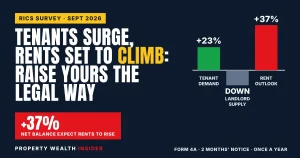
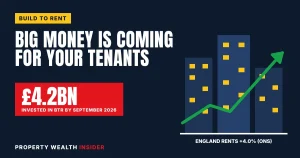
Rents are still rising. The ONS puts the average private rent in England at £1,459 a month in August 2026, up 4.0% in a year, and £2,332 in London. House prices are growing more slowly, with England’s average at £293,000 in July 2026, up 1.1%.
Affordability has also improved. ONS data shows the typical home in England cost 7.6 times typical earnings in 2025, down from 7.8 in 2024, though London is still at 10.6. When renting gets dearer and buying gets relatively cheaper, a deposit scheme gives tenants a strong push.
Our view on the likely impact for landlords:
- Your best tenants are most at risk. The scheme targets households with steady incomes but small savings. Those are usually the tenants who pay on time.
- The effect will be local. Buyers can only use it on new-builds from participating developers. Areas with big new estates nearby will feel it most; town centres with little new supply far less.
- Overall demand is unlikely to collapse. Help to Buy peaked at around 55,600 purchases a year. That is small against 2.7 million renting households who hope to buy, and many renters will not meet the income or price caps.
- Timing is not immediate. Nothing changes until the scheme launches, and a start date has not been given.
New-build investors: the opportunities and the traps
Landlords cannot use Your First Home themselves. It is for first-time buyers buying a home to live in. But it will still affect anyone buying, holding or selling new-builds as investments.
Watch the new-build premium. ONS figures show the average new dwelling sold for £355,000 in the year to September 2025, against £290,000 for an existing home, a gap of about 22%. Cheap government-backed finance tends to support new-build prices. If you buy a new-build to let, part of what you pay may be a premium that resale buyers will not pay.
Competition for plots may rise. If a development is signed up to the scheme, developers may prefer first-time buyers using it over investors, especially if the scheme lifts sales. Bulk investor discounts could become harder to get on those sites.
A sale route for your own stock. If you own newer homes and plan to sell, more first-time buyers with funding is good news. But only new-builds from participating developers qualify, so your second-hand flat will not be eligible. You may be competing on price against brand-new homes.
Mind the equity loan maths. Under Help to Buy, buyers repaid the same share of the home’s value when they sold, not the cash they borrowed. If Your First Home works the same way, a buyer who borrows £60,000 (20% of £300,000) and later sells for £330,000 would repay £66,000. That can make owners slower to move, which affects when ex-scheme homes come back onto the market. The repayment rules for the new scheme have not yet been published.
What landlords should do now
- Do not panic before the Budget. The income cap, price caps and start date will decide who can actually use the scheme. Wait for 28 October 2026 before making big decisions.
- Map your exposure. List which properties are in England, which tenants earn enough to buy, and which homes are near large new-build sites.
- Run the numbers on each tenancy. Use the calculator above with local new-build prices. If buying is cheaper than renting from you, assume that tenant could leave.
- Price for retention. A void plus re-letting costs can easily exceed a modest rent rise you skip. For likely buyers, a fair rent may keep them longer.
- Plan your re-let. Know your target tenant if a household buys and leaves. Families, sharers and lower-income renters outside the caps remain strong demand.
- Rethink new-build purchases. If you are buying off-plan, ask the developer whether the site will join the scheme and how that affects investor pricing and resale values.
- Note the Budget date: 28 October 2026
- Check which of your properties are in England
- Find new-build developments within a few miles of each let
- Estimate each tenant’s buying power with the calculator
- Review upcoming rent reviews for tenants likely to buy
- Prepare a re-let plan and marketing for at-risk properties
- Ask developers about scheme participation before buying off-plan
- Check the price and income caps once they are published
FAQs
What is the Your First Home scheme?
It is a planned government equity loan scheme for first-time buyers in England buying a new-build home from a participating developer. It is expected to support 2.5% deposits with a 20% government equity loan.
When does Your First Home start?
No start date has been given. The government says costs and implementation timelines will be set out at the Budget on 28 October 2026. It is not open to applications yet.
Is the Your First Home equity loan interest-free?
Only at first. The government has confirmed an initial interest-free period but not its length or what is charged afterwards. Under the old Help to Buy scheme, interest started in year six at 1.75%.
Can landlords or buy-to-let investors use Your First Home?
No. It is for first-time buyers buying a new-build home. Landlords will feel it indirectly, through tenants who buy and through new-build prices and competition.
Does Your First Home apply in Wales or Scotland?
No. The announcement covers England only. Wales, Scotland and Northern Ireland make their own housing policy.
Is Your First Home the same as Help to Buy?
It works in a similar way, using a 20% equity loan on new-builds. The headline difference is the 2.5% deposit, half the 5% minimum under Help to Buy. Price caps, income caps and loan terms have not been published, so other differences are not yet known.
Sources
- MHCLG: New first-time buyer scheme to be confirmed at Budget (26 September 2026)
- HM Treasury: Budget 2026 date letter
- MHCLG: Help to Buy equity loan scheme data to 31 March 2023
- Homes England: RFI5206 Help to Buy statistics by year
- Homebuyers’ guide to Help to Buy: Equity Loan 2021 to 2023
- English Housing Survey 2024-25: housing history and future housing
- ONS: Private rent and house prices, UK, September 2026
- ONS: Housing affordability in England and Wales, 2025
This article is news and general guidance only, not financial, legal or tax advice.