Ground Rents Capped at £250: Leasehold Shake-Up Hits Parliament
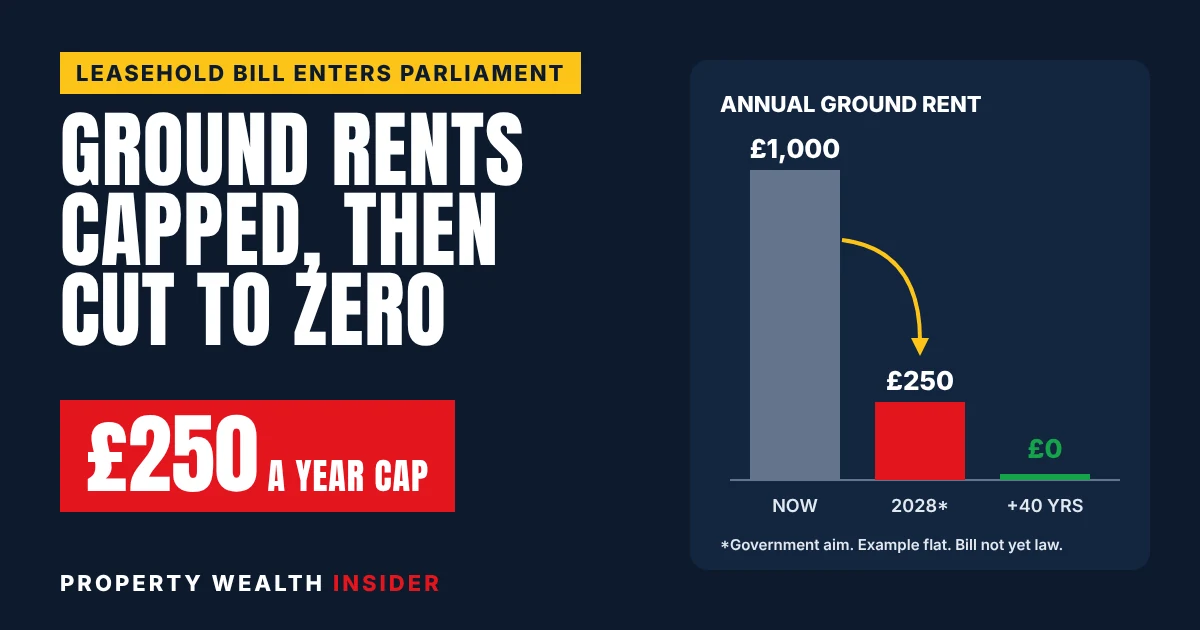
Ground rents on existing leasehold homes in England and Wales would be capped at £250 a year from 2028 under the Commonhold and Leasehold Reform Bill, which the government is putting before Parliament today, Thursday 19 November 2026.
The Bill also brings in commonhold as the standard tenure for most new flats, makes it easier for existing blocks to convert, and replaces forfeiture with a court-led process. It also makes the changes needed before cheaper lease extensions under the 2024 Act can start.
If you own buy-to-let flats, this affects your running costs, the value of your flats and when you should extend a lease. Remember the difference: this is a Bill, not law. Some separate service charge changes already have fixed start dates.
Key facts
- Ground rents would be capped at £250 a year, with the government aiming for 2028. They would fall to a peppercorn (zero) after 40 years.
- The government estimates 770,000 to 900,000 leaseholders pay more than £250 a year now. Around 3.8 million leasehold homes have a ground rent.
- Existing blocks could convert to commonhold with 50% support from leaseholders, down from 100%.
- Marriage value would be scrapped for leases with 80 years or less left, and leaseholders could extend to 990 years. These changes can only start after the Bill passes.
- Already scheduled under the 2024 Act: new service charge rights from 1 April 2027 and standardised bills from 1 November 2027.
What the Bill contains
The Ministry of Housing, Communities and Local Government (MHCLG) published the details on 18 November. The Bill covers England and Wales. Property law is devolved in Scotland and Northern Ireland, so they are not included. Government figures put the number of leasehold homes in England and Wales at around 5.1 million. About 1.91 million of the homes in England are privately rented.
| Measure | What the Bill would do | What it means for landlords who own flats |
|---|---|---|
| Ground rent cap | £250 a year cap, aimed for 2028, falling to a peppercorn after 40 years | Lower costs on high ground rent flats, and onerous leases become easier to sell |
| Forfeiture | Current powers replaced with a court-led system | Your flat could no longer be lost over a small disputed debt |
| Permission and admin fees | Ministers get powers to cap excessive fees (for example pet consents or replacing a front door) | Consent to sublet, alterations and similar fees could be capped later |
| New-build tenure | Commonhold becomes the default for most new flats and homes, with narrow exceptions such as shared ownership | Buying off-plan will increasingly mean commonhold with no ground rent |
| Commonhold conversion | Support needed falls from 100% to 50%. Leaseholders who don’t consent stay on modified leases until they sell | Your block could convert without you voting for it |
| Freehold estates (“fleecehold”) | Protects homeowners on private estates from threats to take their home over unpaid estate charges | Relevant if you own freehold new-build houses on managed estates |
| 2024 Act fixes | Allows 990-year extensions, ends paying the landlord’s costs in most cases and scraps marriage value | Lease extensions and freehold purchases should cost less once these are commenced |
| Broadband | Landlords must answer gigabit broadband requests within set timeframes | Faster fibre installs in blocks, which helps your lets |
The £250 ground rent cap explained
The government’s ground rent policy statement sets the cap at £250 in cash terms. It will not rise with inflation. It applies to most existing long residential leases that the Leasehold Reform (Ground Rent) Act 2022 does not already cover. That Act effectively banned ground rents on most new leases from 2022.
After 40 years the cap drops to a peppercorn, which in practice means nothing. The government’s consultation on “quid pro quo” leases says the 40 years run from the date the measures are implemented. If that date is 2028, ground rents would reach zero around 2068.
The policy statement lists several exemptions: business leases, community-led housing, home finance plans and leases granted without a premium. The rent shared owners pay on the landlord’s share is not affected. Leases where a buyer accepted a higher ground rent in return for a lower purchase price were still under consultation.
Worked examples (flat ground rents with no reviews):
Flat A pays £400 a year. Under the cap it pays £250, a saving of £150 a year, or £1,500 over the first 10 years.
Flat B is a new-build from the 2010s paying £1,000 a year. It would pay £250, a saving of £750 a year, or £7,500 over 10 years. Rent review clauses that double the ground rent would also stop mattering once the cap applies.
Flat C pays £150 a year. The cap makes no difference until the rent falls to a peppercorn after 40 years. From then on it saves £150 a year.
The bigger benefit may come when you sell or remortgage. Flats with high or doubling ground rents have been hard to finance and slow to sell. A legal ceiling of £250 takes away much of that risk. That is our view rather than a government estimate, and the effect on value will vary from block to block.
Calculator: your ground rent saving and lease timeline
Enter your current ground rent and how many years are left on the lease. The calculator shows what the proposed cap would save and when the important dates fall. It does not value a lease extension, because that needs a surveyor.
Ground rent cap and lease timeline estimator
Guide only, not legal or valuation advice. It assumes your ground rent stays the same (no reviews), that the cap starts in the year you enter, and that the 40-year peppercorn clock starts at the same time. The Bill could still change before it becomes law, and exempt leases are not covered. Get a specialist surveyor and solicitor before acting on a lease extension.
Lease extensions and marriage value: wait or act?
Under the current statutory route, a flat owner gets 90 years added to the remaining term and pays a peppercorn ground rent from then on. That is according to the Leasehold Advisory Service. Marriage value is the extra value the extension creates. It counts as nil while more than 80 years remain. Once the lease is at 80 years or below, it is split 50/50 with the landlord, which can add thousands to the premium.
The Leasehold and Freehold Reform Act 2024 already includes the fix. It sets valuation assumptions with no marriage value, allows 990-year extensions and puts new limits on costs. MHCLG says today’s Bill makes “the legislative fixes needed” before those parts can come into force. There is still no start date for them.
Worked example: your flat has 82 years left in November 2026. It drops to 80 years in late 2028. If the Bill passes and the valuation reforms start before then, marriage value never applies. If they start later, you pay it. Waiting is a bet on the parliamentary timetable, so ask a surveyor to price both outcomes before you decide.
Since 31 January 2025 you have not needed to own a flat for two years before you can extend the lease. That means a landlord who has just bought can start the process straight away.
Timeline: what is law and what is still proposed
Two kinds of change are moving at the same time, and they should not be confused. The service charge reforms are already in the 2024 Act, and the government has set dates for them. The ground rent cap, the commonhold changes and the forfeiture reform all depend on today’s Bill passing both Houses and receiving Royal Assent.
- 1 April 2027: stronger rights to service charge information, and leaseholders no longer automatically pay the landlord’s litigation costs.
- 1 November 2027: standardised service charge bills and annual reports from private landlords, clearer administration charges and more open insurance commissions.
- 1 November 2028: standardised bills and reporting extended to social landlords.
What landlords should do now
Work through your leasehold portfolio one flat at a time:
- Pull every lease. Note the ground rent, any review clause (doubling, RPI-linked) and the exact expiry date.
- Flag leases nearing 80 years. Any lease that hits 80 years before 2029 needs a decision soon. Ask a surveyor for a premium now and compare it with the risk of waiting.
- Run the calculator for high ground rents. Anything above £250 a year should get cheaper. Factor that into hold or sell decisions, but don’t count it as income until the Bill is law.
- Diarise 1 April 2027. Use your new information rights to question service charges and insurance costs you think are too high.
- Talk to your block. Once conversion needs only 50% support, the other leaseholders could take the building into commonhold. Find out who is organising and get involved early.
- Re-check new-build purchases. Ask developers which tenure a scheme will use when it completes, and how management costs will work under commonhold.
- Copy of every lease filed, with ground rent and review terms noted
- Expiry year recorded and “80-year date” worked out for each flat
- Surveyor quote for any lease within five years of 80
- Last three years of service charge accounts and insurance schedules saved
- Calendar reminders set for 1 April 2027 and 1 November 2027
- Contact made with the residents’ association or Right to Manage company
FAQs
When does the £250 ground rent cap start?
The government is aiming for 2028, but the cap is in a Bill and has no legal effect yet. It needs to pass Parliament and receive Royal Assent, and then be brought into force.
Will my ground rent go down to zero?
Under the plans, capped ground rents become a peppercorn after 40 years, measured from when the measures are implemented. If that happens in 2028, ground rents would reach zero around 2068.
Should I wait to extend my lease until marriage value is abolished?
That depends on how many years you have left. If you will drop to 80 years before the reforms start, waiting could cost you more. There is no commencement date yet, so get a valuation either way.
Does the leasehold reform apply in Scotland?
No. The Bill covers England and Wales. Property law is devolved in Scotland and Northern Ireland.
Can my block be converted to commonhold without my agreement?
Under the Bill, conversion would need 50% support rather than 100%. Leaseholders who don’t agree would stay on modified leases until they sell.
- MHCLG: Beginning of the end for thousand year old leasehold system (18 November 2026)
- MHCLG: Policy statement on ground rents
- MHCLG: Quid pro quo leases and the ground rent cap (consultation)
- MHCLG: Draft Commonhold and Leasehold Reform Bill
- Leasehold and Freehold Reform Act 2024 (legislation.gov.uk)
- Leasehold Advisory Service: Marriage value
- Leasehold Advisory Service: The new lease
This article is news and general guidance, not financial, legal or tax advice.