Unlicensed let in London? £40k fine plus 2 years’ rent at risk
From Monday 23 November 2026, thousands more London landlords will need a council licence just to let an ordinary flat or house. Islington’s expanded selective licensing scheme switches on across seven more wards that day, following new schemes in Enfield on 1 September and Croydon on 25 September.
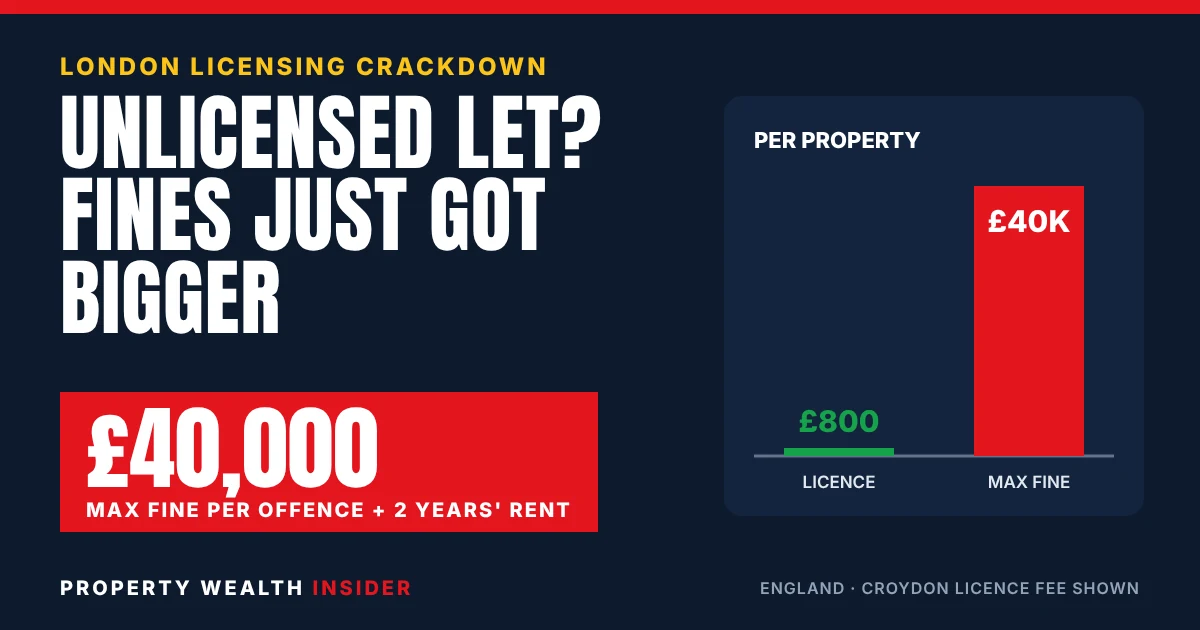
Getting it wrong has never been more expensive. Since 1 May 2026 a council can fine you up to £40,000 per offence for letting an unlicensed property in England, and tenants can now claw back up to two years’ rent through a rent repayment order. Every penalty a London council hands out can also end up on the Mayor’s public Rogue Landlord and Agent Checker.
This guide covers London licensing costs and penalties, how to check whether your property needs a licence, and a calculator to set the licence fee against what you stand to lose. The rules below apply to England only.
Key facts
- The maximum civil penalty for a licensing offence in England rose from £30,000 to £40,000 for offences committed on or after 1 May 2026.
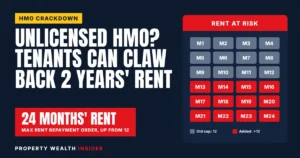
- For licensing offences, rent repayment orders can now cover up to 2 years’ rent (previously 12 months), and tenants have 2 years to apply.
- Islington’s selective licensing scheme expands to 7 more wards on 23 November 2026. Croydon’s 14-ward scheme started on 25 September.
- A Croydon selective licence costs £800 for up to 5 years, or about £160 a year.
- The national landlord register opens to London landlords on 15 July 2027. It costs £65 per property per year, and failing to register can lead to a penalty of up to £7,000.
What has changed in London
There are three types of property licence in England. Mandatory HMO licensing applies everywhere. Additional HMO licensing lets a council extend licensing to smaller HMOs. Selective licensing lets a council require a licence for single-household lets in particular areas. The last two are where London has been busy in 2026.
| Borough | Scheme | In force from | Coverage | Fee (council published) |
|---|---|---|---|---|
| Islington | Selective (expansion) | 23 November 2026, running to 22 November 2031 | Barnsbury, Caledonian, Tufnell Park, Mildmay, Highbury, Junction and Laycock | Not stated in the designation notice. Check with the council. |
| Croydon | Selective and additional HMO | 25 September 2026 | Selective: 14 wards. Plus a new additional HMO scheme | Selective £800 (£480 + £320). One-year licence £544 |
| Enfield | Selective (new designations) | 1 September 2026 | 17 wards in two designations | Check the council’s current fee page |
Islington opened online applications on 7 September 2026. If you let a property in one of those seven wards and you haven’t applied, you have days left before you are committing an offence.
The penalties in full
Letting a property that needs a licence without one is a criminal offence under section 72 (HMOs) or section 95 (selective licensing) of the Housing Act 2004. A council can prosecute you or impose a civil penalty instead. On top of either, the tenant or the council can apply for a rent repayment order.
| Sanction | Before 1 May 2026 | Offences on or after 1 May 2026 |
|---|---|---|
| Civil penalty (Housing Act 2004, s249A) | Up to £30,000 | Up to £40,000 |
| Rent repayment order for a licensing offence | Up to 12 months’ rent | Up to 2 years’ rent |
| Time limit for a tenant to apply for an RRO | 12 months from the offence | 2 years |
| Prosecution | Unlimited fine | Unlimited fine |
| Who can be liable | Person managing or in control | Also superior landlords, such as an owner in a rent-to-rent chain |
The transitional rules matter here. The £40,000 maximum only applies where the offence was committed on or after 1 May 2026. Where a property has been unlicensed since before that date, the doubled RRO period only counts rent from 1 May 2026 onwards. In practice, a full 24-month order for a long-running breach becomes possible from May 2028.
The RRO is capped at the rent the tenant actually paid for the period, less any universal credit paid towards that rent. The tribunal takes into account your conduct, your finances and any previous convictions or penalties. A civil penalty and an RRO can both be imposed for the same breach.
Licence cost vs penalty risk
Take a single-let flat in a Croydon selective licensing ward, let at £1,800 a month. The licence costs £800 and can last up to five years, so about £160 a year. It falls to £700 if you belong to an accredited landlord scheme.
Now suppose the landlord never applies. Croydon could impose a civil penalty of up to £40,000. After two years of unlicensed letting, the tenant could seek up to 24 × £1,800 = £43,200. That is a worst case of £83,200, about 104 times the cost of the licence. Councils do not always fine the maximum, but they set the level, not you.
Use the calculator to run the numbers for your own portfolio. Enter your council’s fee, the licence length and your typical monthly rent.
Licence vs penalty risk
Guide only, not legal advice. This shows legal maximums for offences on or after 1 May 2026. Actual penalties are set by the council and tribunal, and an RRO is limited to the rent the tenant actually paid, less any universal credit for rent.
With the default inputs (three flats, £800 licences lasting five years, £1,800 rent), licensing costs £480 a year. The worst-case exposure is £249,600: £120,000 in civil penalties plus £129,600 in rent repayments.
How to check if your property needs a licence
Licensing is set street by street, and the rules can change partway through a tenancy. Work through these steps for every property you let in England, not only those in London.
- Count the occupants and households. If five or more people from more than one household share facilities such as a kitchen or bathroom, the property is a large HMO and needs a mandatory licence anywhere in England.
- Check for smaller HMOs. Three or four sharers from more than one household make an HMO. It may need an additional licence if the council runs an additional licensing scheme. Enfield has a borough-wide additional scheme, and Croydon brought in a new additional HMO scheme on 25 September.
- Check the ward for selective licensing. Single-household lets need a licence if they are in a selective designation. Use the council’s postcode or ward checker. Don’t rely on the borough name alone, because Islington, Croydon and Enfield only cover specific wards.
- Read the exemptions. Long leases over 21 years, family arrangements and social landlord tenancies are among the exemptions. A property with an HMO licence doesn’t also need a selective licence.
- Check scheme dates. Find out when each scheme started and when it ends. Schemes last up to five years, and an expired licence or a renewed designation can catch you out.
- Apply before you let. Under Croydon’s model you pay Part A when you apply and Part B once the licence is approved. A duly made application is generally a defence while it is being processed, so keep your submission confirmation.
- Diarise the conditions and the renewal. Breaching licence conditions is a separate offence. Keep gas, electrical and fire safety certificates current and put the expiry date in your calendar.
Rent-to-rent and managed lets: since 1 May 2026, the licensing offences can also be committed by a superior landlord, such as an owner who lets to a company that sublets. The owner has a defence if they took all reasonably practicable steps to ensure the property was licensed. A clause in the lease alone is not enough.
The Rogue Landlord and Agent Checker
The Mayor of London’s Rogue Landlord and Agent Checker is a public database of landlords and agents who have been prosecuted or fined by a London council. It also lists London Fire Brigade prosecutions and prohibition notices, and agents expelled from a redress scheme. All London councils have agreed to take part.
Records stay on the database for a set period and show the date until which they are publicly visible. Tenants, agents and lenders can search it, so a licensing fine can affect your reputation as well as your finances.
Check your own name, any company you let through and your letting agent. If your agent appears on it, find out why before handing over another property.
The landlord register comes next
The government’s Register your rental property service is the private rented sector database created by the Renters’ Rights Act. It opens region by region from 15 December 2026, starting with the West Midlands. Each region gets a three-month window to register.
| Region | Opens | Deadline |
|---|---|---|
| West Midlands | 15 December 2026 | 14 March 2027 |
| East of England | 15 January 2027 | 14 April 2027 |
| South East | 15 March 2027 | 14 June 2027 |
| London | 15 July 2027 | 14 October 2027 |
| South West (last) | 15 August 2027 | 14 November 2027 |
Registration costs £65 per property per year, pro-rated during the rollout. The region depends on where the property is, not where you live. Failing to register can lead to a penalty of up to £7,000, and penalties of up to £40,000 apply for knowingly or recklessly giving false information.
Once every rented home is on one database, unlicensed properties in licensing areas will be much easier for councils to spot. Sort out any licensing gaps before London’s registration window opens.
What to do now
- This week: if you let in Barnsbury, Caledonian, Tufnell Park, Mildmay, Highbury, Junction or Laycock, apply to Islington before 23 November.
- This month: run every property through the seven-step check above and record the result.
- Before renewal dates: apply to renew before your licence expires. A lapsed licence counts the same as no licence.
- Before July 2027: gather the details for each London property so you can register as soon as the London window opens.
- Occupant and household count recorded for every property
- Council licensing map checked by postcode (mandatory, additional and selective)
- Licence applied for, or exemption documented in writing
- Application confirmation and fee receipts saved
- Licence conditions read and diarised (gas, EICR, smoke and CO alarms, waste, references)
- Licence expiry date in your calendar with a 3-month reminder
- Agent’s management agreement says who is responsible for licensing
- Your name, company and agent checked on the Rogue Landlord and Agent Checker
- Register your rental property window noted for each region you let in
FAQ
What is the fine for renting an unlicensed property in London?
For offences committed on or after 1 May 2026, a council can impose a civil penalty of up to £40,000 per offence. It can prosecute instead, where the fine is unlimited. A rent repayment order of up to two years’ rent can be added on top.
How do I know if my property needs a selective licence?
Enter the postcode in your council’s licensing checker or check its designation map. Selective licensing usually covers specific wards rather than a whole borough.
Can a tenant claim back rent if my property is unlicensed?
Yes. A tenant can apply to the First-tier Tribunal for a rent repayment order within two years of the offence. For licensing offences after 1 May 2026, the order can cover up to two years of the period when the property was unlicensed.
How much does a selective licence cost in London?
It depends on the council. Croydon charges £800 for up to five years, cut to £700 for accredited landlords or £750 with an EPC of B or above. Check your own council’s current fee schedule.
Does the new landlord register replace licensing?
No. Register your rental property is a separate national requirement at £65 per property per year. Council licensing still applies wherever a scheme is in force.
- Housing Act 2004, section 249A (financial penalties), legislation.gov.uk
- Financial Penalties (Housing Offences and Breach of Banning Orders) Regulations 2026 (SI 2026/319)
- Renters’ Rights Act 2025, section 103 (rent repayment orders)
- Renters’ Rights Act 2025, section 105 (unlicensed HMOs and houses: offences)
- Renters’ Rights Act 2025 (Commencement No. 2 and Transitional and Saving Provisions) Regulations 2026
- Housing and Planning Act 2016, section 44 (amount of rent repayment order)
- GOV.UK: Register your rental property service, guidance for landlords
- GOV.UK: House in multiple occupation licence
- Mayor of London: Rogue Landlord and Agent Checker
- London Borough of Islington: Designation of an Area for Selective Licensing 2026 (public notice)
- Croydon Council: Selective Licensing Scheme 2026, fees and discounts
- Enfield Council: Property licensing
This article is news and general guidance only. It is not financial, legal or tax advice.